
Tongkonan houses: villages around Rantepao
Look closely at the carved fronts and buffalo-horn columns of Toraja’s tongkonan. These raised wooden houses belong to extended families, with rice barns facing them across the compound. Kete Kesu, Palawa and Buntu Pune show houses, harvest stores and family resting places together.
Tongkonan and alang
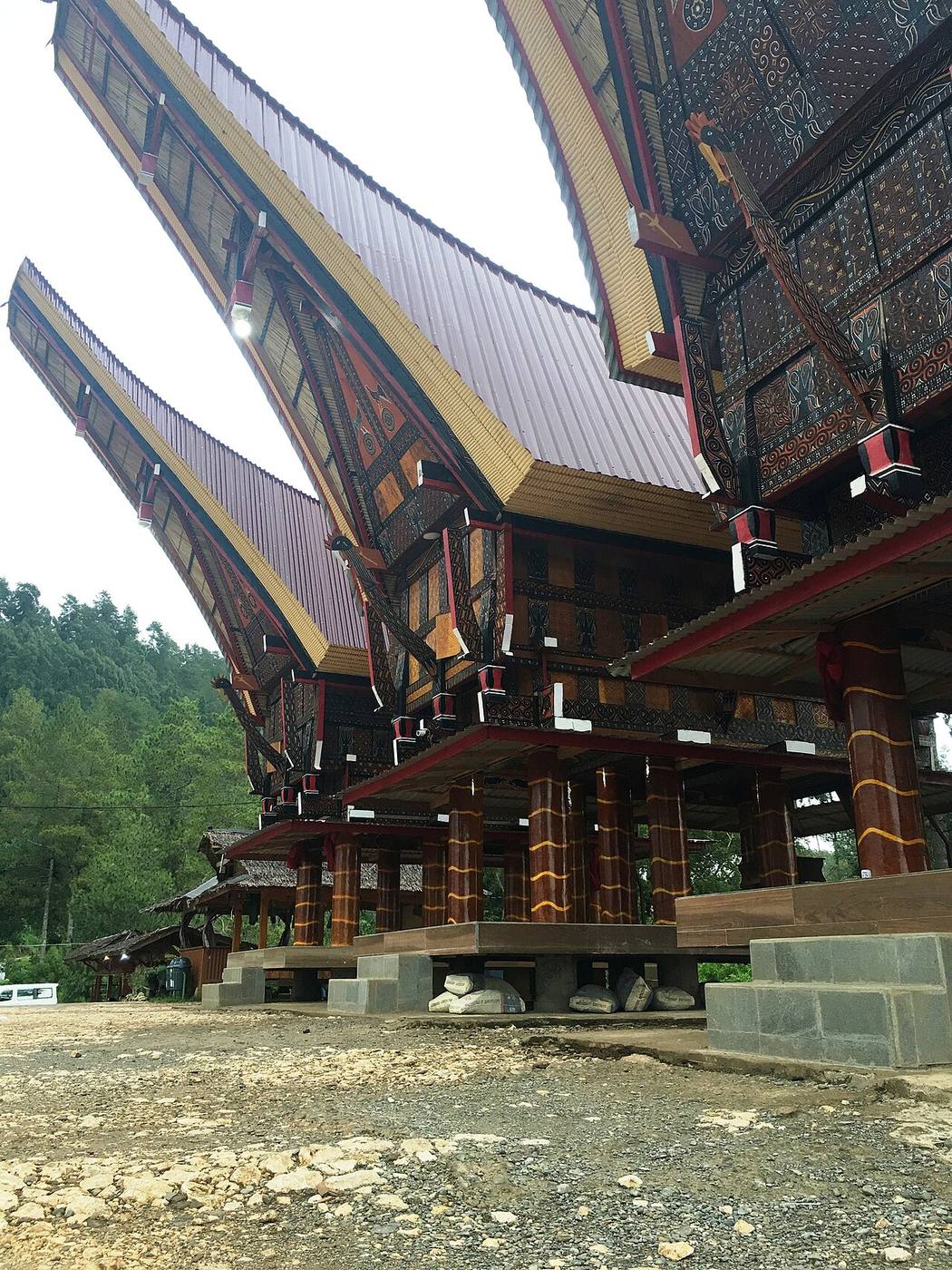
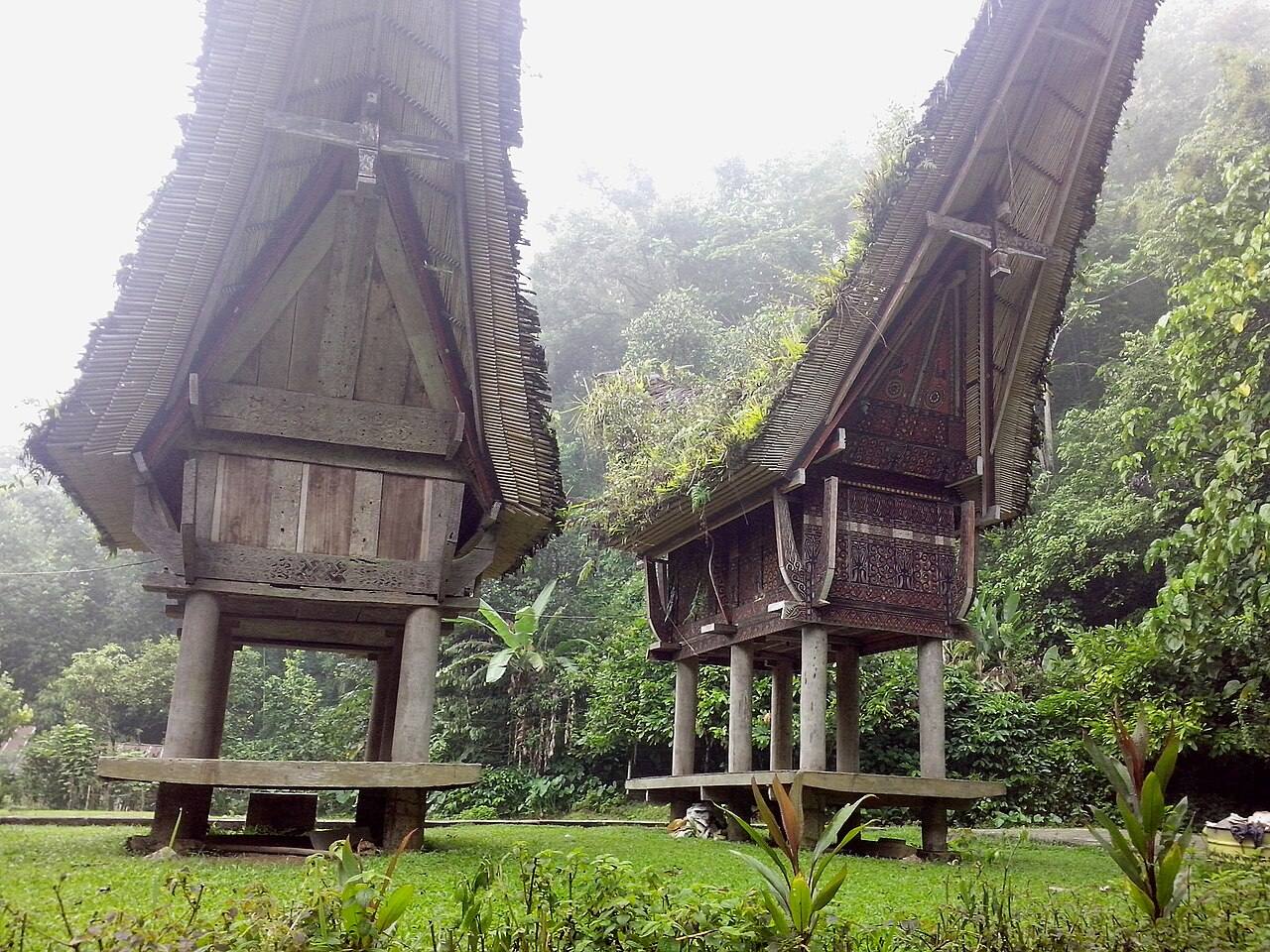
A tongkonan is an inherited extended-family house, raised in wood beneath a sweeping curved roof. Families gather there for social and customary occasions, store heirlooms and hold ceremonies. The building’s size and carving express family identity and standing. Alang are the rice barns facing the houses across the compound, keeping the harvested crop close to the household it feeds.
The paired buildings form part of a wider family landscape. Larger complexes can contain water holes, animal pens, graves and plantations as well as houses and barns. The connection between dwelling and stored harvest becomes especially clear in a row of buildings, where similar roof shapes face each other across the open space. Access to a private tongkonan interior belongs to the family, even in villages that receive visitors.
Carving, horns and woven cloth
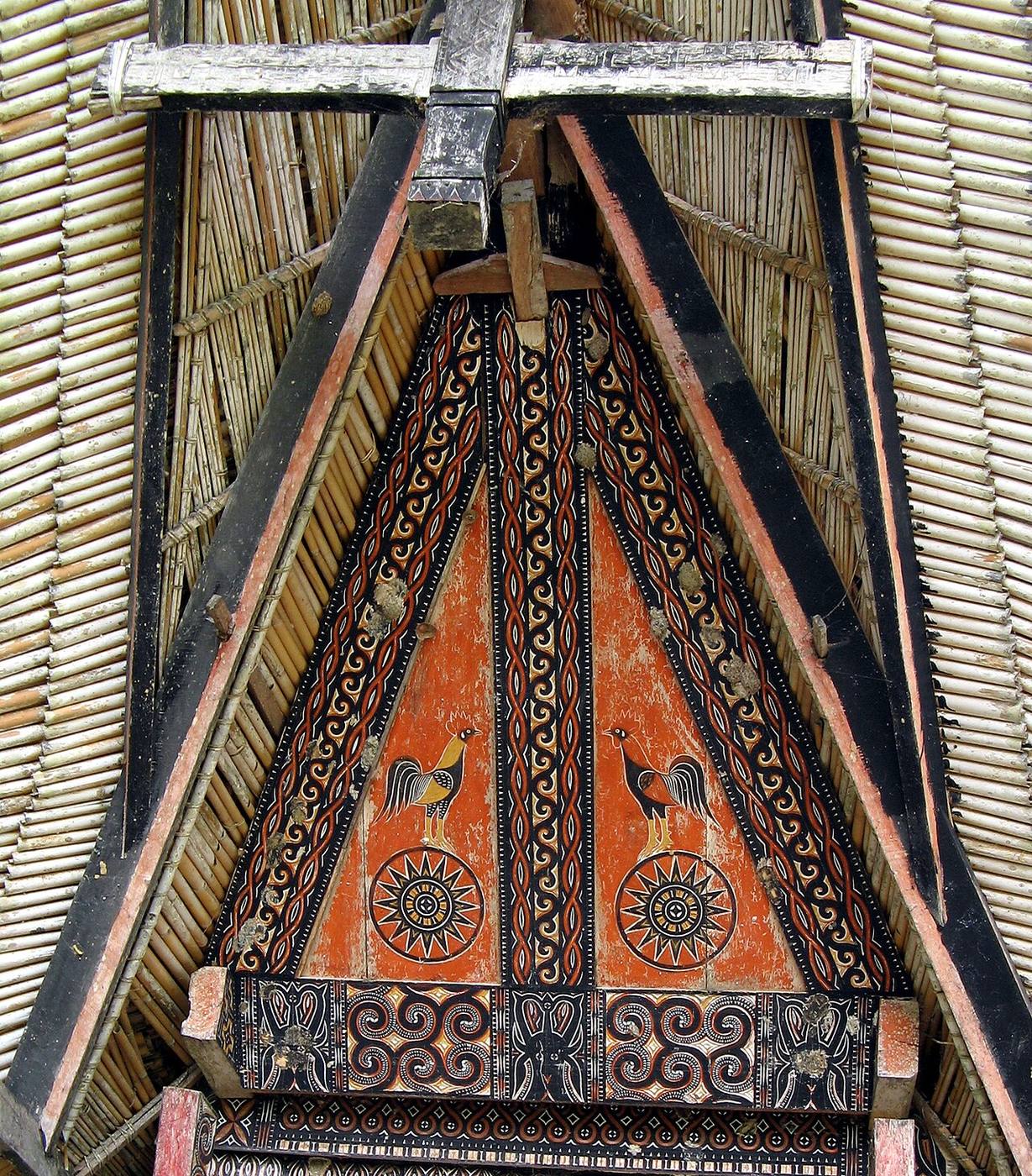
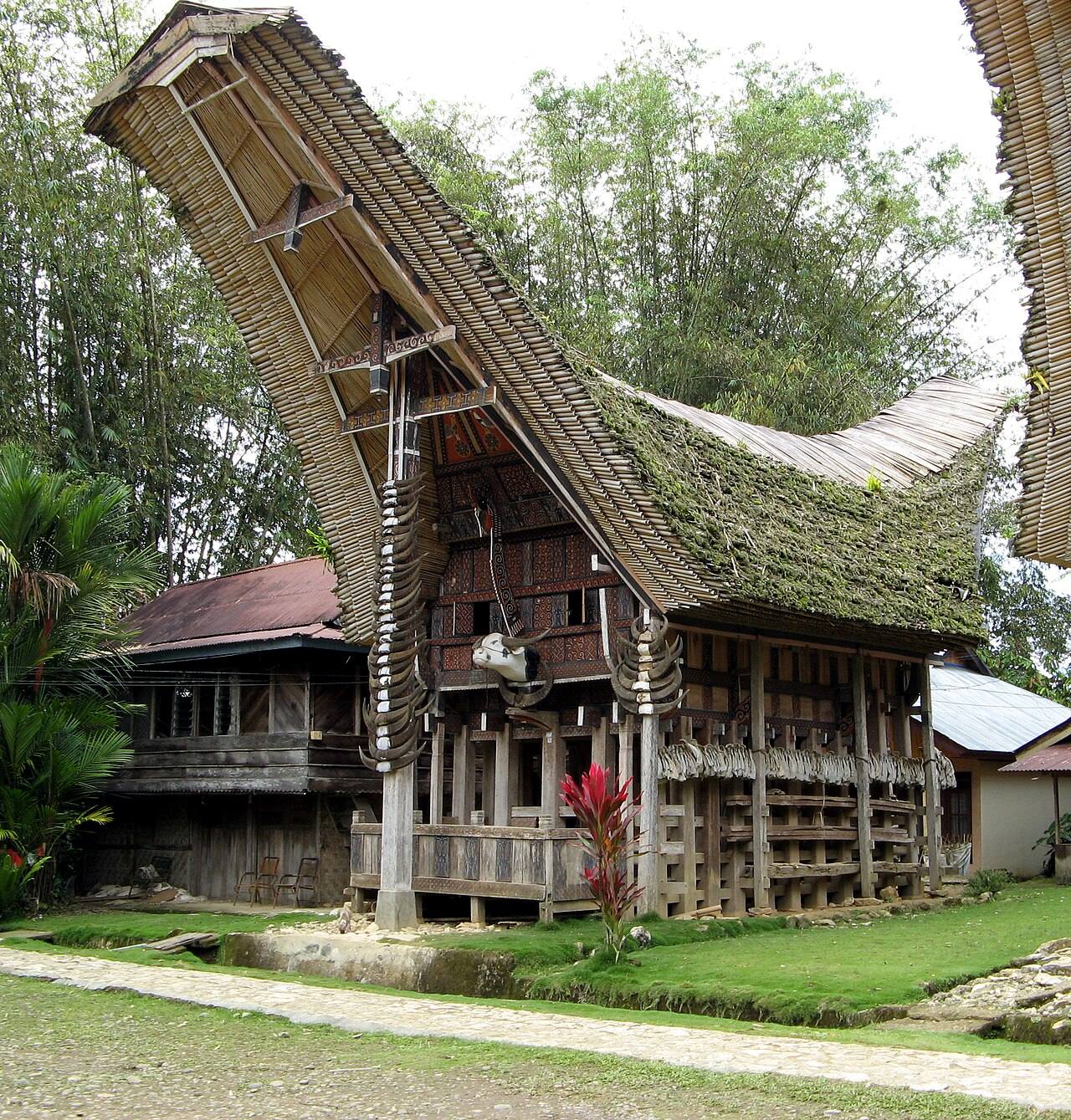
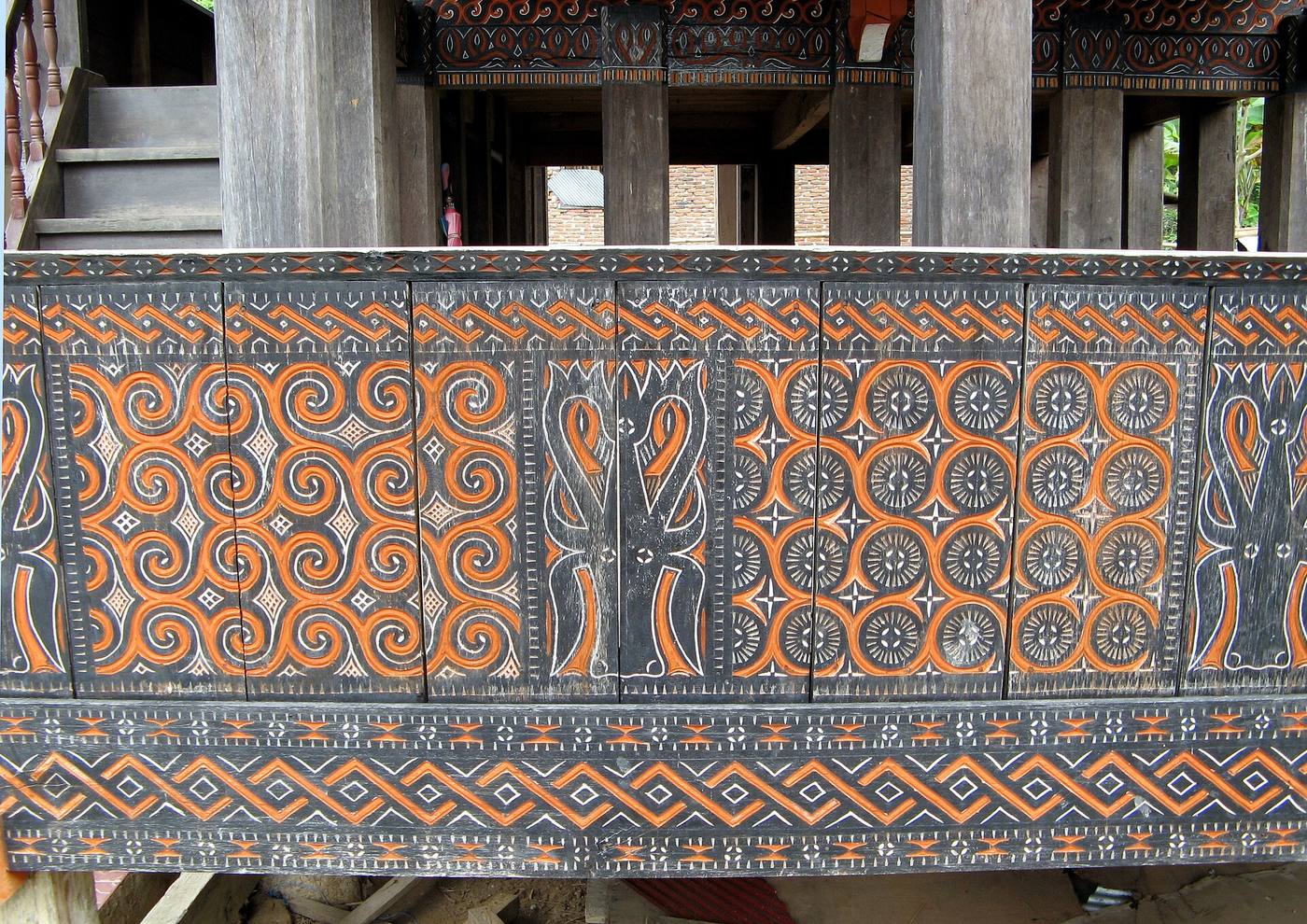
Plant, animal and geometric motifs cover tongkonan façades. They link the house with ancestry, customary identity and the family’s social place. Buffalo horns displayed in front recall animals sacrificed at Rambu Solo funerals, giving ceremonial contributions a lasting presence on the house.
Cloth carries related associations. Toraja ikat can take months to weave, with geometric, ancestor and buffalo motifs in colors including red, cream, white, yellow and dark blue. It hangs within tongkonan and accompanies funeral rites. Together, carved timber, horn displays and woven cloth give the family house layers of meaning beyond its curved silhouette. The horns recall past ceremonies; the house itself remains an inherited place of gathering and family life.
Kete Kesu’s village and cliffs
At Kete Kesu, tongkonan and granaries stand in rows among rice fields. Plant, animal and geometric carving covers the house fronts. A museum in a tongkonan contains Chinese ceramics, sculpture and blades, while carved ornaments and wall hangings are sold around the village compound.
The route behind the houses passes menhirs toward a cliff with hanging coffins, chambers and tau-tau. Visitors walk from the family buildings to their resting places within the same village. The museum and carving offer a closer look at objects made, used and kept by Toraja families.
Palawa’s rows of houses
Palawa, also written Pallawa, lies about 10 km north of Rantepao in Sesean. Eleven tongkonan houses face fifteen rice barns, their rooflines extending along the village. Carved timber fronts and horn displays repeat across the rows, with open ground between the houses and granaries.
Parking and souvenir kiosks serve visitors to this village of customary family life. On the northern village day, the road reaches Bori Kalimbuang’s ceremonial ground and standing stones before Palawa’s house rows. Pa’gellu dance performances have their own booking arrangements. The houses and rice stores remain part of the village’s everyday setting.
Nanggala and Buntu Pune
Nanggala has two tongkonan and sixteen alang in east–west rows. The granaries fill much of the compound around the pair of houses, with repeated curved roofs and raised timber stores. Their arrangement shows how much space a family compound can devote to keeping the harvested rice.
Buntu Pune lies about 3 km south of Rantepao. Its two large tongkonan and seven granaries are linked to the Pong Maramba family and date to the late nineteenth century. A family grave occupies the hill behind the barns, and the associated ceremonial ground is at Rante Karassik. People live among traditional and newer buildings in the village. Houses, grain stores, the hill grave and ceremonial ground occupy places in the same family history; visitors explore the outdoor compound while private interiors remain with the residents.
Reviewed: