
Toraja death rituals: funerals, graves and family houses
Explore Toraja’s family villages and burial places for its distinctive culture of remembrance. Around Rantepao, curved-roof houses, wooden tau-tau and cliff-hung coffins stand among rice fields and hills. Funerals and Ma’Nene gather living relatives around people who remain part of the family after death.
Rambu Solo and family life
At a Rambu Solo funeral, relatives and neighbors receive guests, share food and accompany the deceased toward burial. The extended family prepares for an occasion that can last days or weeks. Some funerals follow the death by weeks, months or years, as relatives gather and contribute to the preparations. The gathering expresses devotion to deceased parents and marks their passage to the ancestors. Family members do much of the work together, receiving people from the wider community as well as their own relatives.
The ceremonial ground can be busy with guests, processions and animals. At Lolai, the coffin procession known as Ma’palao or Ma’pasonglo leaves the tongkonan for that ground: men carry the coffin while women walk ahead holding red cloth. Buffalo are paraded before sacrifice, and their meat is shared with guests. Pigs may also be sacrificed. Receptions, the coffin procession and the feasts take place as the family’s program unfolds, sometimes over several days.
July–August is the peak funeral period, during the season after harvest. A local guide can arrange an introduction when a family holding a ceremony welcomes visitors. The hosts set the time and the part of the gathering guests attend. The practical details of a funeral visit include mourning dress, a customary gift and permission for photographs.
Burial cliffs and tau-tau
At Lemo, wooden tau-tau stand behind rails on balconies cut into a cliff above rice paddies. A small path crosses the fields toward the rock, with mud underfoot after rain. From below, you see the figures looking out over the cultivated land, with tomb chambers cut into the cliff behind them. Each effigy represents someone who has died and belongs to the family that remembers that person. The figures stand beside the resting places of the deceased, close to the villages and fields of their descendants.
Londa, about 7 km south of Rantepao, has wooden coffins supported beneath cliff overhangs and tau-tau in galleries above the approach. Stairs descend to a natural cave. Inside are coffins grouped by family ancestry, visible skulls and bones, and clothing or cigarettes left by relatives. Stalactites and stalagmites interrupt the chamber, and some passages require crouching. A flashlight or a guide’s lamp illuminates the ground and the burials. These are family memorials: belongings, effigies and remains stay where relatives have placed them.
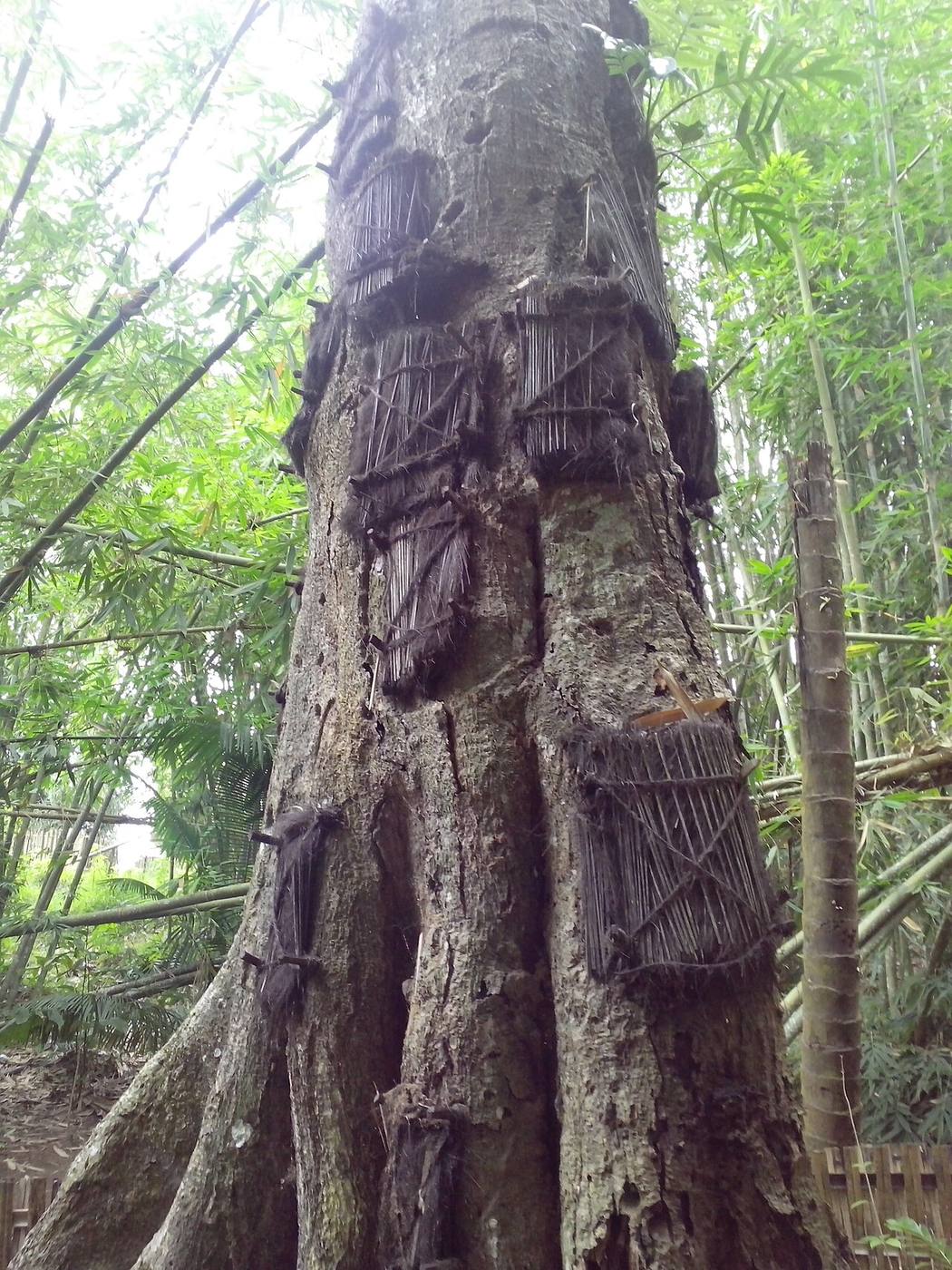
At Kambira, small covered recesses remain in living tree trunks. Families once placed infants who died before teething in these tree graves. The custom has ceased, and the old recesses remain closed within the trees. Lo’ko Mata, near Batutumonga in the northern hills, has chambers carved into a single huge boulder, with painted doors, miniature tongkonan and some tau-tau outside. Together, the cliff, cave, tree and boulder burial places show how families have made resting places within the surrounding landscape.
Ma’Nene and remembrance
During Ma’Nene, families bring deceased relatives from their graves, clean them and change their clothing. Parents, grandparents and ancestors receive practical care from living relatives. Fresh clothes and careful handling express affection and respect for people who remain part of the household’s history. Younger generations take part in that continuing responsibility to their elders.
Baruppu is one of the northern Toraja communities associated with Ma’Nene. Families have also gathered for the ritual in Maiting, in Rindingallo, and at Ampang Batu. August is the usual month associated with these post-harvest gatherings. Participating families and communities choose their dates, so travel in that month still follows the households’ own arrangements.
Visitors may encounter the cleaning and redressing at close quarters when hosts welcome them. The work belongs to relatives caring for their own dead, and photography requires their permission. Outside ritual days, the villages still have their inherited houses and family graves. The rows of barns, the houses where relatives gather and the tombs nearby show the setting in which this care continues from one generation to the next.
Tongkonan and the family compound
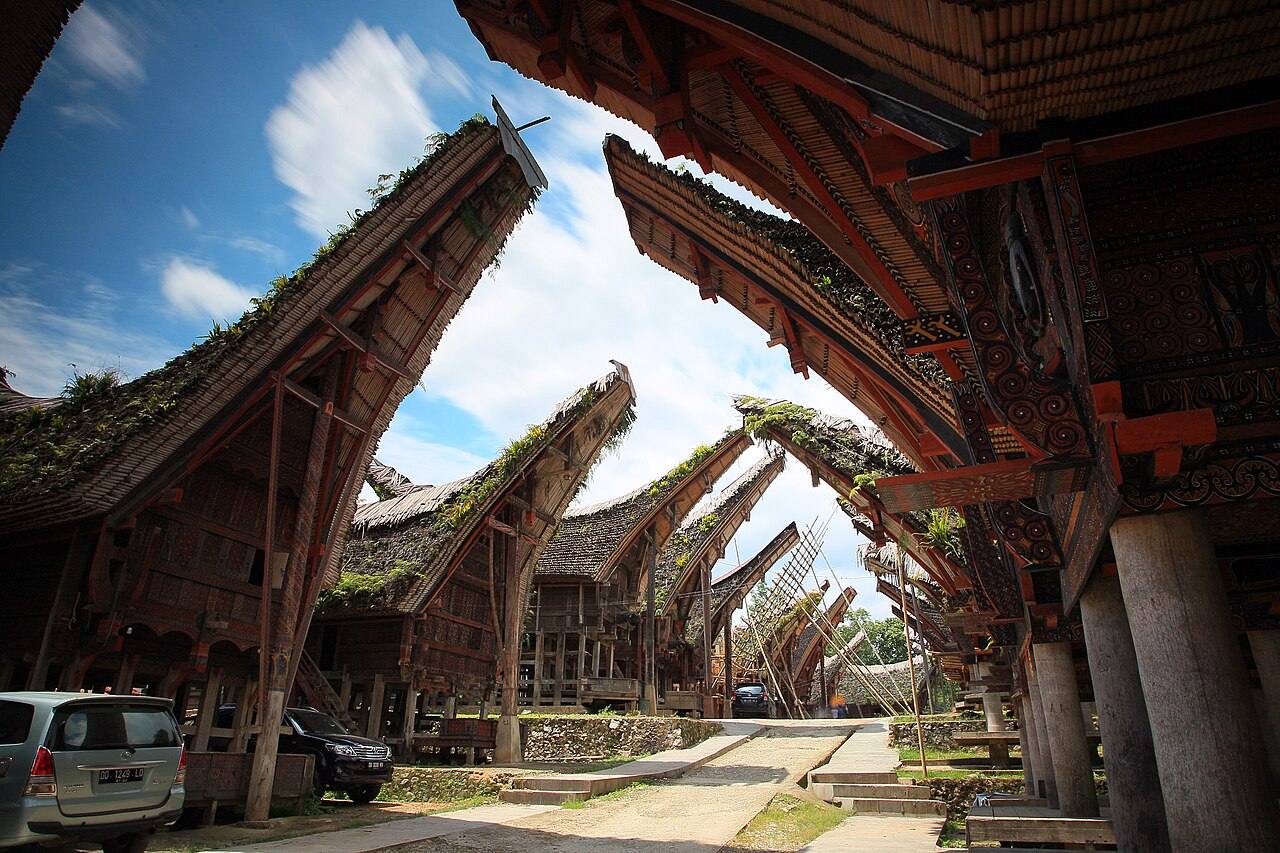
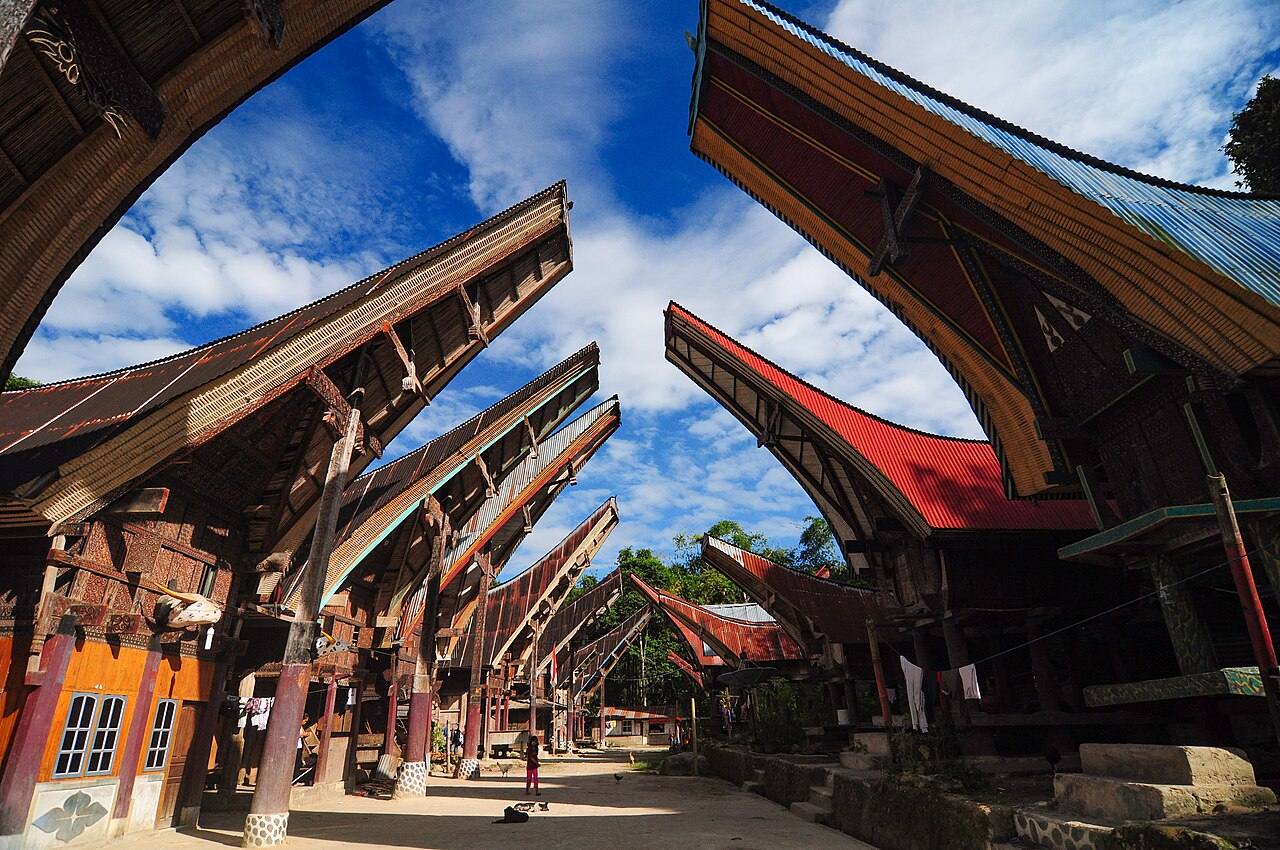
Tongkonan rise on wooden supports beneath sharply curved roofs. Families inherit these houses, keep heirlooms inside and gather there for social and ceremonial occasions. Carved fronts carry plant, animal and geometric patterns associated with ancestors and family identity. Buffalo horns are stacked up the front columns, recording animals sacrificed at Rambu Solo and expressing the household’s standing. The horns remain on the house long after guests have left the funeral ground.
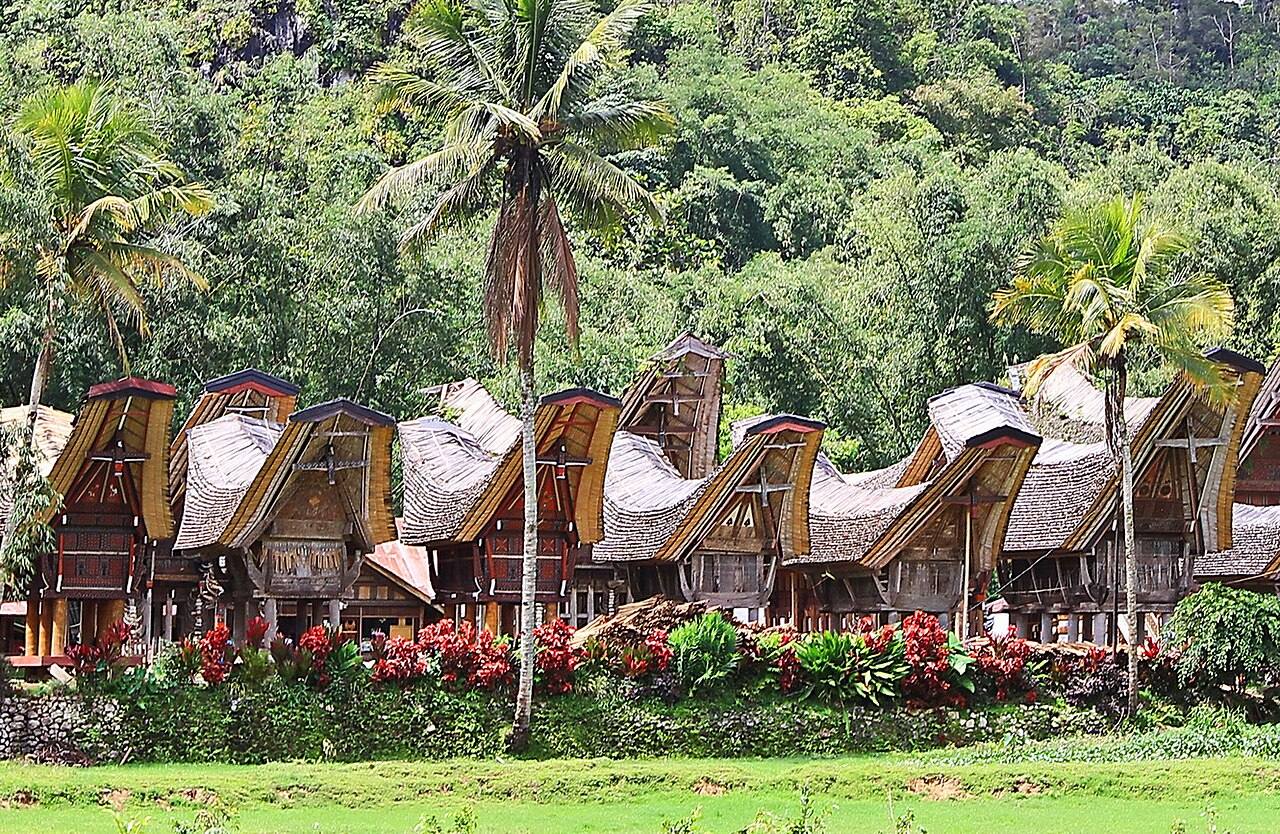
Across the compound, alang rice barns face the houses. Their raised construction and curved rooflines echo the tongkonan; the harvested grain is stored close to the families it feeds. A larger compound may include animal pens, plantations and graves. At Kete Kesu, visitors pass the house and barn rows before reaching the burial cliff behind them. Carved animal-shaped coffins, tau-tau and rock chambers occupy that hill, connecting the village’s buildings with its family resting places.
North of Rantepao, Palawa has long rows of houses and rice barns facing across an open village space. At Buntu Pune, two large tongkonan and seven granaries belong to a lived-in compound linked to the Pong Maramba family, whose grave is on the hill behind the barns. The carving, horns and woven cloth encountered in these villages all have a place in family and ceremonial life. Visitors explore the outdoor compounds; private rooms remain the families’ own space.
Reviewed: